After sampling, the bauxite samples and red muds cores were taken to the Earth Sciences laboratories of the Department of Chemical, Physical, Mathematical and Natural Sciences of the University of Sassari.
The 16 samples of bauxite (Sardinian, Australian and African), with an average weight of approximately 4 kg, were initially stored in a room, maintained at a constant temperature of 26 °C, in order to start their drying phase.
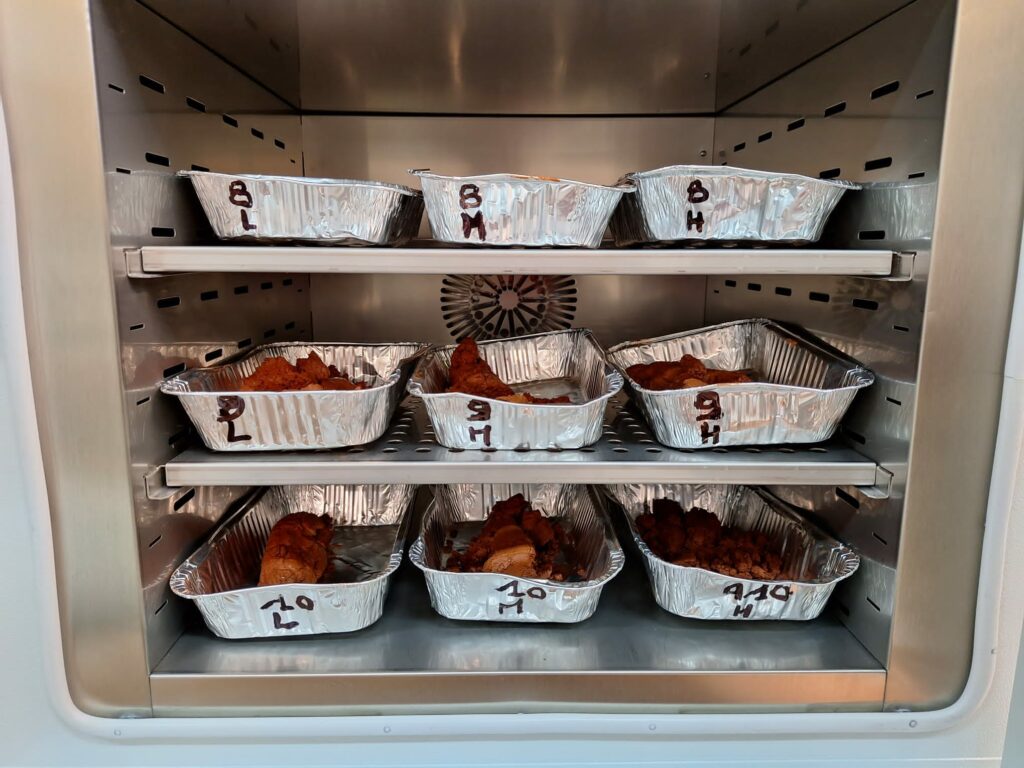
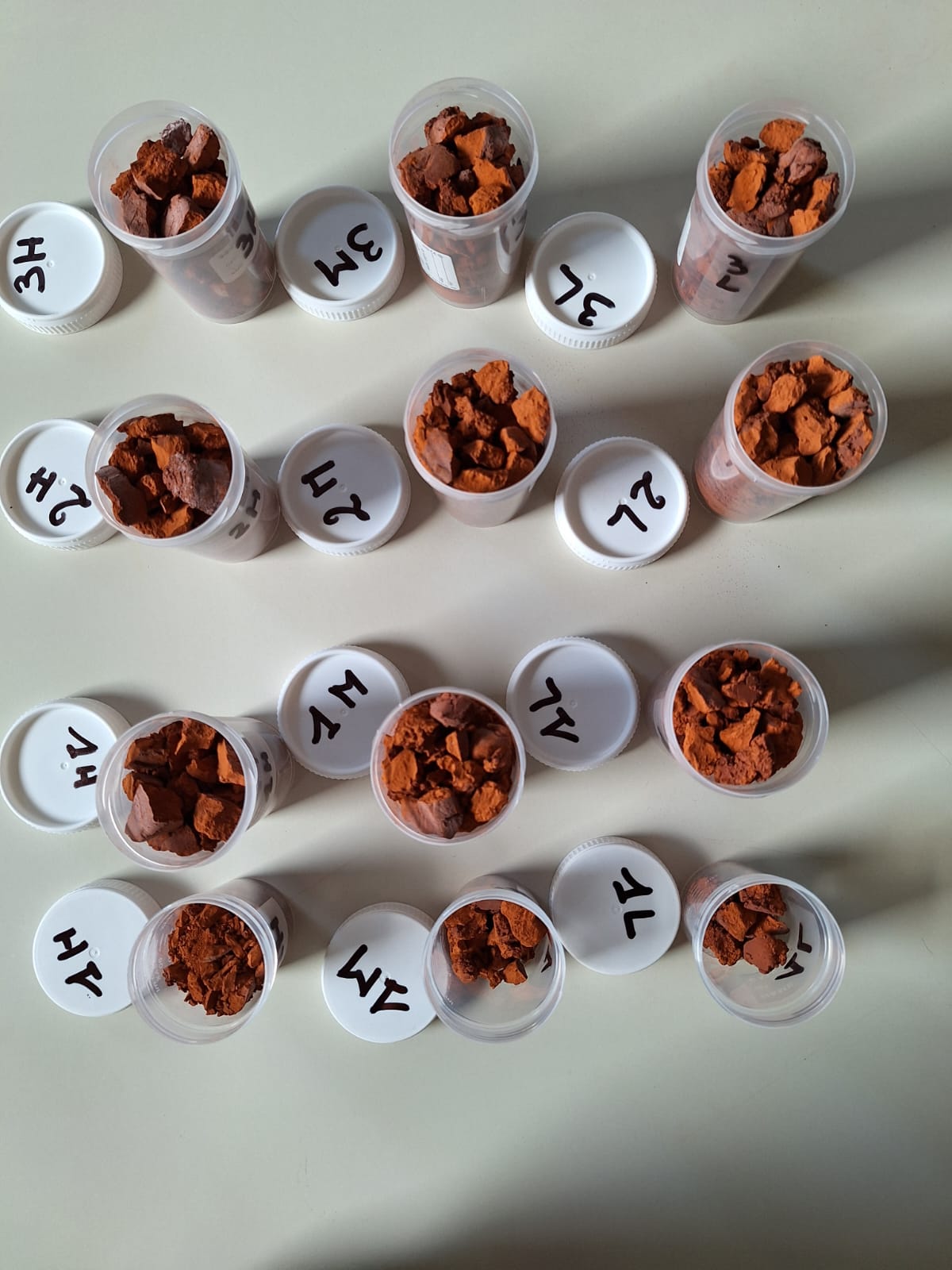
In the meantime, the preparation of the red muds samples has begun. The cores were divided into 3 equal parts (called, in addition to the proper name of the sample, L-low, M-medium, H-high), placed to dry in a ventilated oven at a temperature of 65 °C for a week, crushed, and finally quartered until obtaining a portion of the material of approximately 40 g. The 42 samples thus obtained were pulverized using a planetary ball mill, equipped with agate jars and spheres.
On March 14 the red mud samples (28 aliquots 1Kg each from the 14 surface specimen) and one sample of Australian bauxite were delivered at the Dept of Earth and Geoenvironmental Sciences of UniBa. The red mud samples were oven dried at low temperature ( 65°C) for 7-10 days to eliminate weakly bound water while avoiding changes in mineralogy and then homogenized using a ZrO2 ball mill prior to XRD analysis. Three aliquots per sample were obtained to get replicate analyses.
The australian bauxite sample was finely ground by ZrO2 ball milling and prepared for replicate XRD measurements.